

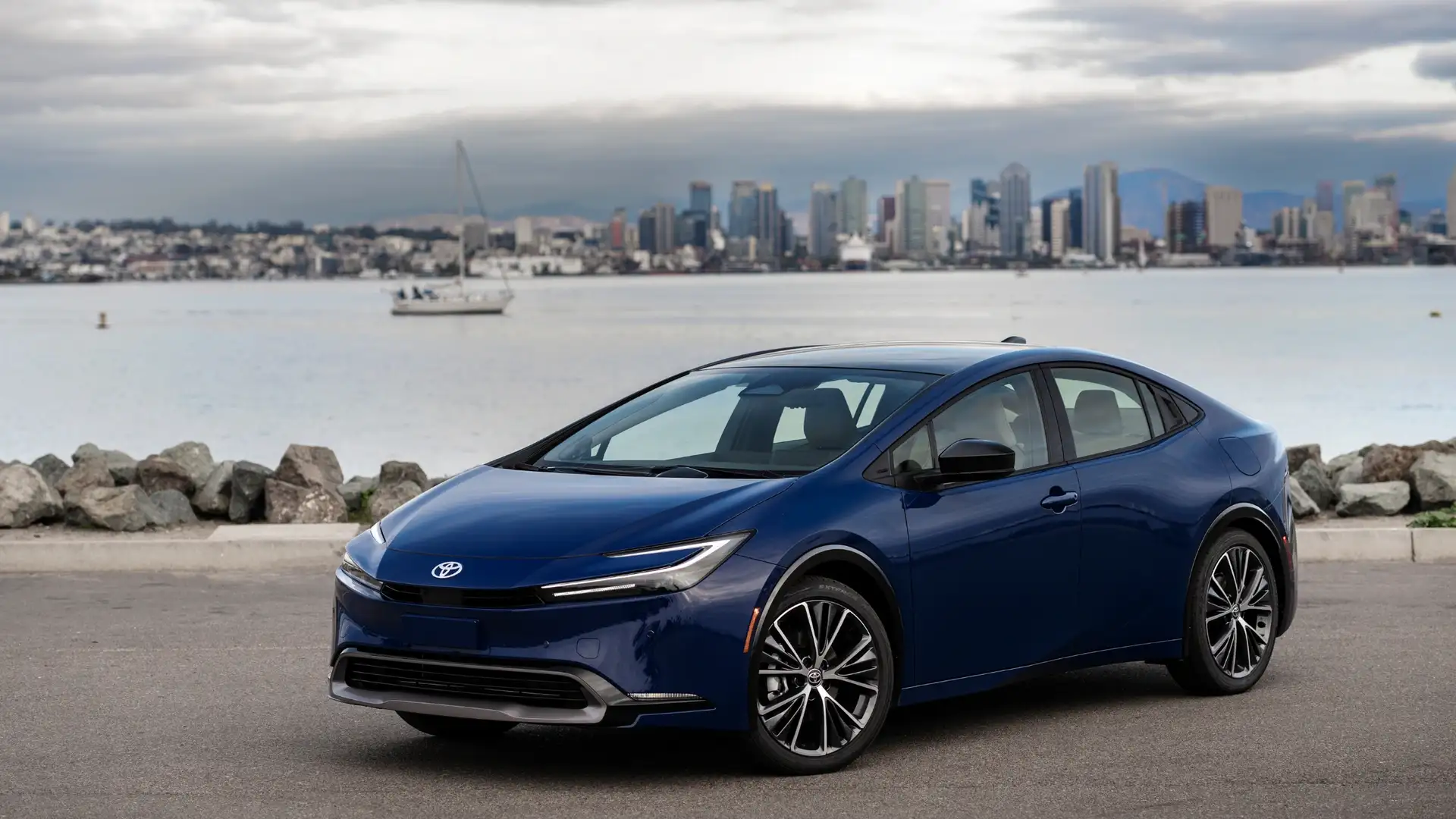
2026 Toyota Prius in Hagerstown, MD
The 2026 Toyota Prius continues the brand’s long-standing development of hybrid vehicle engineering by refining mechanical efficiency, electrical integration, and structural balance within a compact liftback platform. This generation emphasizes measurable performance gains through increased system output, a revised hybrid architecture, and expanded drivetrain configurations while maintaining controlled dimensions and aerodynamic efficiency. The vehicle is designed to deliver consistent power delivery, predictable handling behavior, and comprehensive electronic support systems without introducing unnecessary mechanical complexity. Each component has been calibrated to function cohesively within the hybrid system, resulting in a vehicle defined by technical precision and operational consistency.
Interior Dimensions and Passenger Accommodation
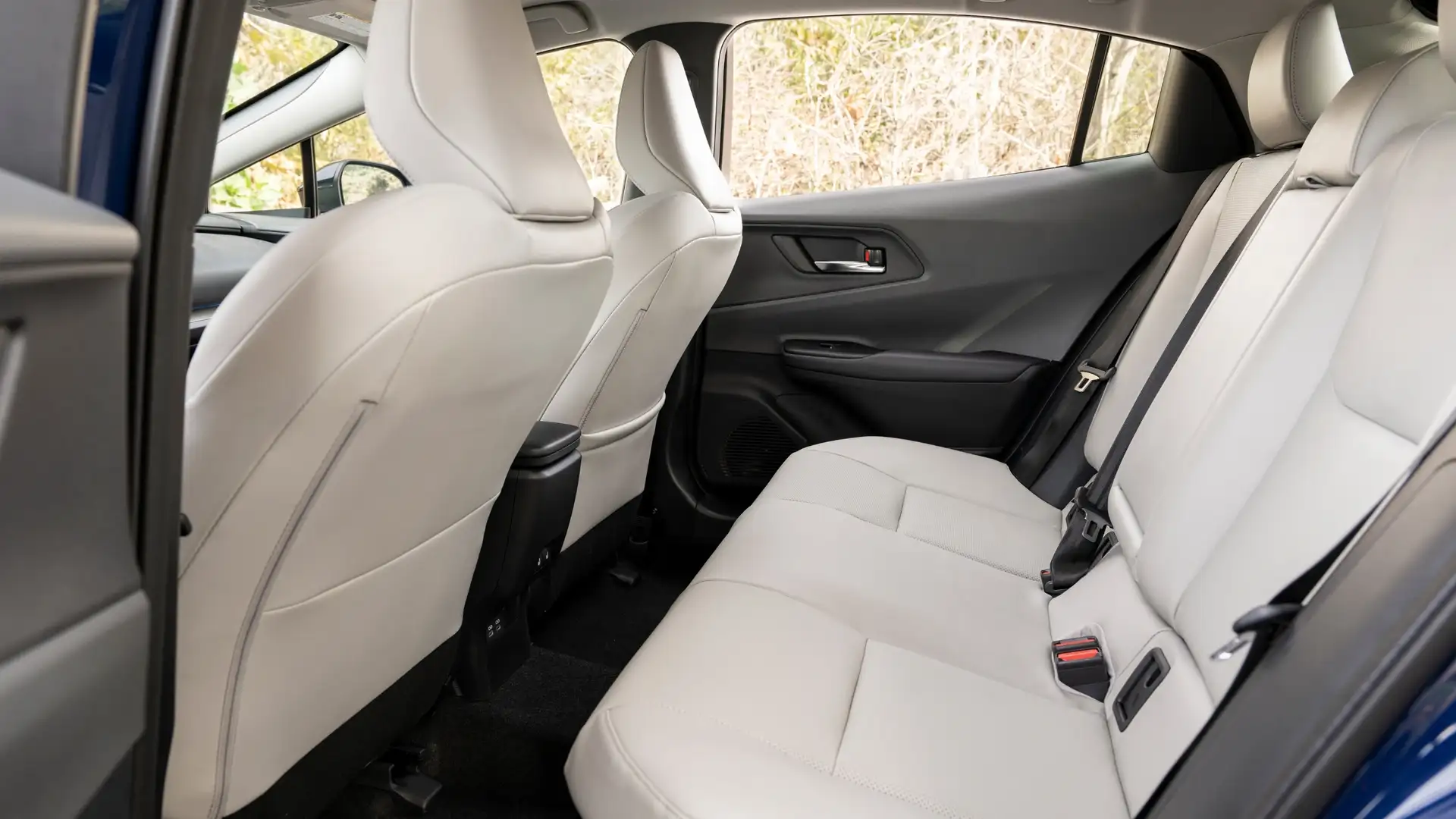
The interior of the 2026 Toyota Prius provides seating for five occupants with an EPA-rated passenger volume of 91.2 cubic feet. Front headroom measures 38.0 inches, while rear headroom measures 36.4 inches. Front legroom is rated at 43.2 inches, with rear legroom measuring 34.8 inches. Shoulder room measures 55.3 inches in the front and 52.8 inches in the rear, while hip room measures 54.7 inches and 51.7 inches, respectively.
Cargo capacity is measured at 23.8 cubic feet with rear seats in place on LE grades and 20.3 cubic feet on XLE, Nightshade, and Limited grades. A standard cargo area tonneau cover supports load concealment and organization within the rear liftback area.
Driver Display Systems and Infotainment Integration
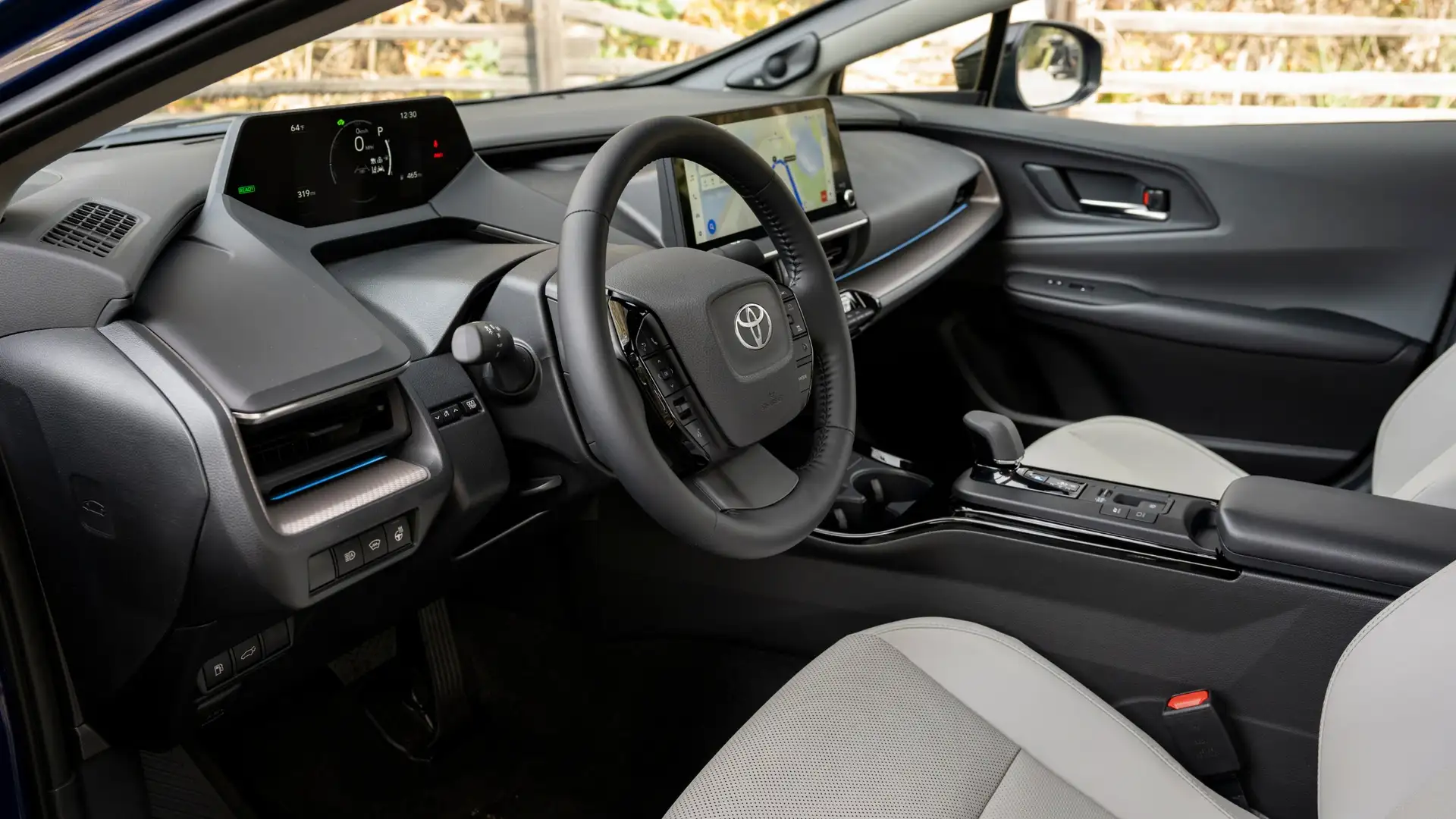
A top-mounted digital gauge cluster is standard across all trims and incorporates a 7-inch LCD display. This display presents vehicle speed, drive mode indicators, fuel economy data, trip information, outside temperature, and warning notifications. Steering wheel-mounted controls allow direct interaction with audio, communication, and vehicle information functions.
Infotainment systems include either an 8.0-inch or an available 12.3-inch Toyota Audio Multimedia display, depending on the grade. Both systems support wireless Apple CarPlay® and Android Auto™ compatibility, Bluetooth® connectivity, USB media input, and SiriusXM® trial functionality. USB-C charge ports are distributed throughout the cabin, with up to six ports available depending on configuration. Wireless smartphone charging is included on select trims.
Hybrid Powertrain Configuration and Output Optimization
The 2026 Toyota Prius is equipped with the M20A-FXS 2.0-liter four-cylinder gasoline engine operating on the Atkinson cycle. This engine utilizes an aluminum block and cylinder head construction and features a double overhead camshaft configuration with four valves per cylinder and Variable Valve Timing with intelligence. Total engine displacement measures 1,987 cubic centimeters, supported by a bore of 3.17 inches and a stroke of 3.84 inches. A compression ratio of 14.0:1 supports efficient combustion and reduced thermal loss under typical operating conditions.
The gasoline engine produces 150 horsepower at 6,000 rpm and delivers 139 lb.-ft. of torque at 4,400 rpm. When integrated with the electric drive components, the hybrid system achieves a combined net output of 194 horsepower in front-wheel-drive models and 196 horsepower in all-wheel-drive configurations. This increase in total system output reflects improvements in electric motor efficiency and power management calibration.
Electric propulsion is provided by a permanent magnet AC synchronous motor positioned to drive the front wheels while enabling regenerative braking during deceleration. The electric motor generates 111 horsepower and 152 lb.-ft. of torque, contributing immediate low-speed response and supplemental torque during acceleration. Energy is supplied by a lithium-ion hybrid battery pack with a nominal voltage of 222 volts and a capacity of 4.08 ampere-hours. The system supports a maximum DC voltage of 600 volts, allowing efficient power transfer between the battery and motor.
Transmission Design and Drivetrain Functionality
Power distribution in the 2026 Toyota Prius is managed by an electronically controlled continuously variable transmission. This eCVT eliminates traditional stepped gear ratios, enabling seamless modulation of engine speed and motor output based on driving demand. The transmission is designed to maintain optimal efficiency by keeping the gasoline engine within its most effective operating range while allowing the electric motor to assist during launch and low-speed operation.
All-wheel-drive models incorporate an electronic on-demand system that adds a dedicated rear-mounted electric motor. This rear motor produces 40 horsepower and 62 lb.-ft. of torque and activates automatically when additional traction is required. The system operates independently of the front drivetrain, eliminating the need for a mechanical driveshaft. This configuration reduces overall mechanical loss while providing enhanced stability on low-traction surfaces. Front-wheel-drive models prioritize reduced curb weight and higher efficiency metrics, while all-wheel-drive models focus on expanded traction capability.
Chassis Structure, Suspension Layout, and Steering Control
The chassis of the 2026 Toyota Prius is supported by an independent MacPherson® strut front suspension paired with a multi-link rear suspension. Both suspension assemblies include stabilizer bars designed to manage lateral body movement during cornering and directional transitions. This configuration balances ride comfort with structural control, allowing predictable responses under braking and acceleration.
The 2026 Toyota Sienna is available with either front-wheel drive or electronic on-demand all-wheel drive. The all-wheel-drive system activates the rear electric motor automatically during low-traction conditions, vehicle launch, or when additional stability is required. This configuration improves traction without the complexity or mass of a conventional mechanical all-wheel-drive system.
Chassis Engineering, Suspension Geometry, and Steering Calibration
The chassis of the 2026 Toyota Sienna is designed to support both passenger load capacity and ride stability. The front suspension consists of an independent MacPherson® strut design with an integrated stabilizer bar, while the rear suspension uses a multi-link layout with its own stabilizer bar. Select grades feature sport-tuned suspension components, including adjusted stabilizer bar diameters to refine handling characteristics.
Steering is controlled through an electric power-assisted rack-and-pinion system that provides consistent feedback and controlled input across a wide range of speeds. Turning circle measurements are 34.4 feet for LE grades and 35.4 feet for XLE, Nightshade, and Limited grades. These dimensions support maneuverability in confined environments without compromising highway stability.
Braking performance is handled by an electronically controlled brake system that integrates regenerative braking with conventional hydraulic braking. Front brakes consist of ventilated disc assemblies, measuring 11.1 inches on front-wheel-drive models and 12.0 inches on all-wheel-drive models. Rear brakes utilize solid discs measuring 11.0 inches across all configurations. An automatic electric parking brake is standard.
Exterior Dimensions and Aerodynamic Efficiency
The 2026 Toyota Prius is constructed on a wheelbase measuring 108.3 inches. Overall vehicle length is 181.1 inches, with a total width of 70.2 inches. Vehicle height varies by grade, measuring 55.9 inches on LE models and 56.3 inches on XLE, Nightshade, and Limited grades. Front and rear overhangs measure 38.3 inches and 34.4 inches, respectively.
Ground clearance is rated at 5.6 inches for LE grades and 6.0 inches for higher trims. These measurements support a low center of gravity while maintaining sufficient clearance for daily driving conditions. Aerodynamic efficiency is reinforced by a coefficient of drag rated at 0.27 when equipped with 17-inch wheels. An active grille shutter system further manages airflow to reduce drag and support thermal regulation.
Wheel configurations include 17-inch alloy wheels with 195/60R17 all-season tires on LE grades and 19-inch alloy wheels with 195/50R19 tires on XLE, Nightshade, and Limited grades. Tire repair kits are standard in place of a conventional spare tire.
Seating Systems and Interior Equipment
Seating materials vary by grade, beginning with fabric-trimmed front seats on LE models and extending to SofTex®-trimmed seating surfaces with power adjustment on higher trims. Available driver seat configurations include eight-way power adjustment with lumbar support, while front passenger seats offer six-way adjustability. Heated front seats are standard on XLE and Nightshade grades, with Limited trims adding ventilated front seating and optional heated rear seats.
Rear seating includes a 60/40 split fold-down configuration, with select trims adding a center armrest. Interior features such as a power liftback, digital rearview mirror, and memory settings for the driver seat are available depending on the grade. Single-zone climate control with pollen filtration is standard across the lineup.
Safety Engineering and Driver Assistance Technologies
The 2026 Toyota Prius is equipped with Toyota Safety Sense™ 3.0 as standard equipment. This system includes Pre-Collision System with Pedestrian Detection, Full-Speed Range Dynamic Radar Cruise Control, Lane Departure Alert with Steering Assist, Lane Tracing Assist, Road Sign Assist, Auto High Beams, and Proactive Driving Assist.
Additional standard safety systems include eight airbags, Blind Spot Monitor with Rear Cross-Traffic Alert, Safe Exit Alert, Rear-Seat Reminder, Tire Pressure Monitor System, Vehicle Proximity Notification System, and an integrated backup camera display. Front and rear parking assist with automatic braking is standard on most trims, with available advanced parking and panoramic view monitoring on select configurations.
Connectivity Systems and Integrated Vehicle Services
Connected services available for the 2026 Toyota Prius include Wi-Fi Connect with integrated streaming compatibility, Service Connect for vehicle monitoring and maintenance updates, and Remote Connect functionality through the Toyota app. These systems allow remote vehicle access, location tracking, and status monitoring depending on grade and subscription availability. Drive Connect functionality adds cloud-based navigation support and intelligent voice assistance with integrated points of interest data.
Schedule a Test Ride in Hagerstown, MD
To fully understand the engineering improvements and system integration of the 2026 Toyota Prius, scheduling a test drive provides direct exposure to its hybrid performance, drivetrain responsiveness, and driver assistance technologies. Experiencing the vehicle in motion highlights the smooth operation of the hybrid system, the effectiveness of the electronically controlled transmission, and the balance provided by the suspension and steering systems. A test drive also allows evaluation of the digital displays, infotainment functionality, and seating ergonomics in practical use. We invite drivers to explore these features firsthand by arranging a visit with Younger Toyota in Hagerstown, MD. Our team is available to support a detailed walk-through and hands-on evaluation of the 2026 Toyota Prius.
Contact Us