

2026 Toyota Corolla Cross in Greencastle, PA
The 2026 Toyota Corolla Cross is engineered as a compact SUV focused on measurable efficiency, controlled performance, and standardized safety integration. Its design prioritizes structural balance, predictable drivetrain behavior, and optimized interior packaging within the small SUV classification. Every system, from power delivery to chassis configuration, reflects Toyota’s emphasis on consistency and durability. This model is offered with multiple drivetrain configurations and trim-dependent equipment while maintaining a uniform mechanical foundation. The 2026 Toyota Corolla Cross serves as a platform defined by specifications rather than stylistic excess.
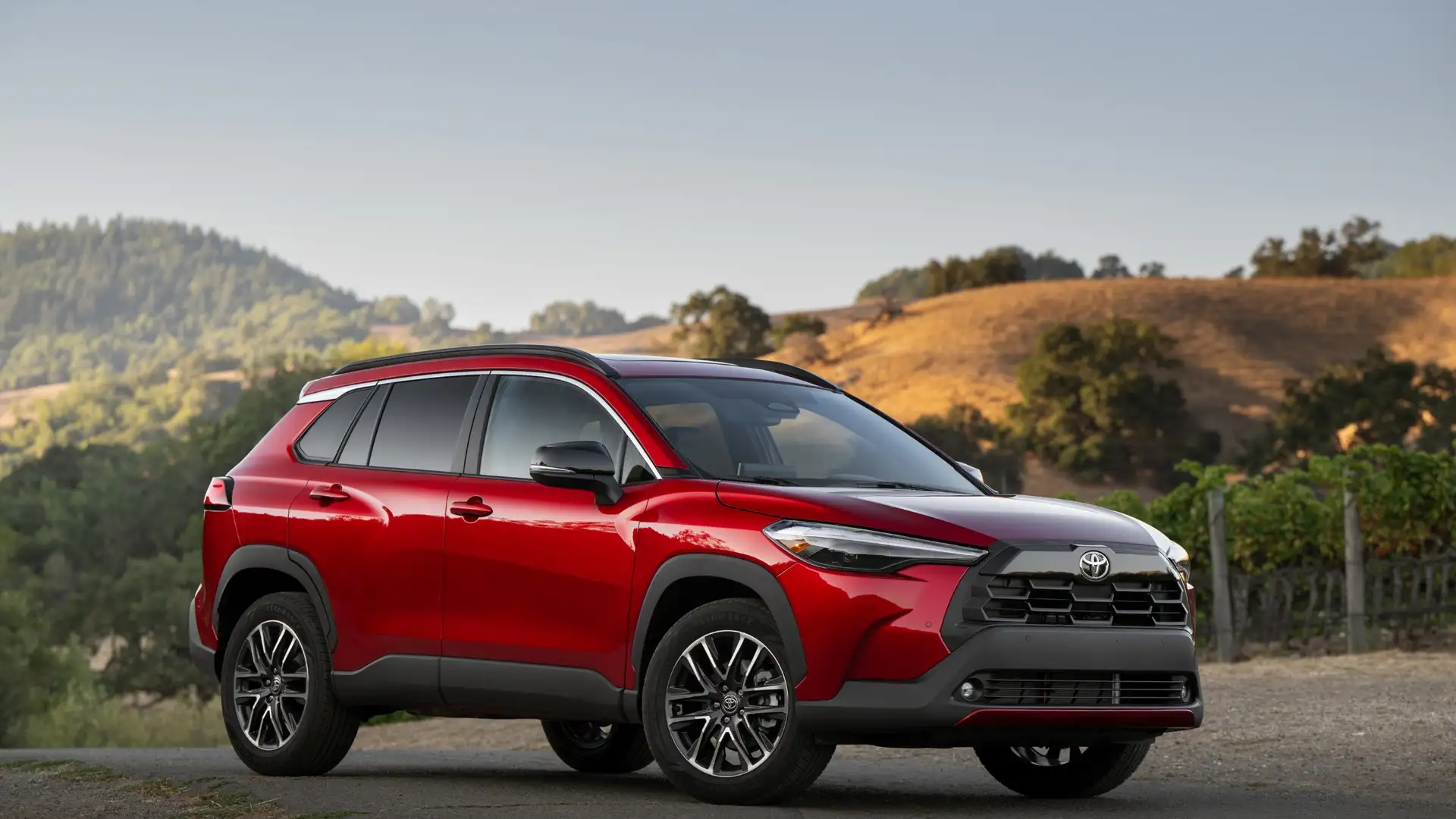
Interior Dimensions and Passenger Capacity
The 2026 Toyota Corolla Cross is configured to seat five occupants. Front headroom measures 39.5 inches, while rear headroom measures 39.1 inches on models equipped with a moonroof. Front legroom extends to 42.9 inches, while rear legroom measures 32.0 inches. These measurements support standard adult seating positions without excessive intrusion from drivetrain components.
Shoulder room measures 52.7 inches in the front and 52.4 inches in the rear. Hip room measures 52.6 inches in the front and 43.8 inches in the rear. EPA passenger volume is rated at 93.8 cubic feet on models equipped with a moonroof and 94.9 cubic feet on models with a standard roof.
Cargo volume measures 24.0 cubic feet behind the second row on front-wheel-drive models and 21.5 cubic feet on all-wheel-drive models. Maximum towing capacity is rated at 1,500 pounds with a maximum tongue weight of 150 pounds.
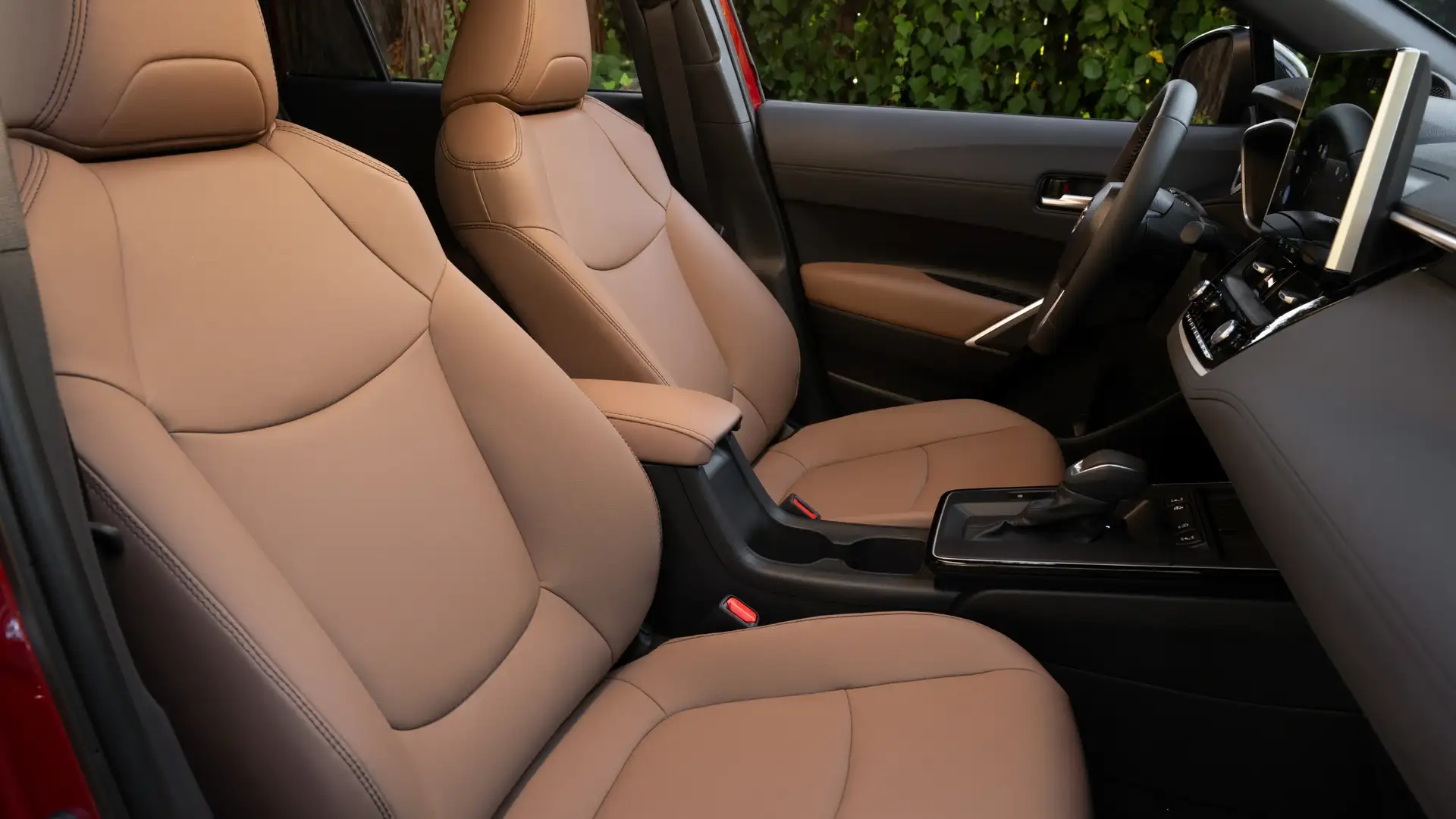
Digital Displays and Multimedia Integration
Standard instrumentation includes a 7-inch digital gauge cluster on lower grades, while higher grades feature a 12.3-inch digital cluster. These displays present vehicle speed, engine data, driver assistance status, and system alerts. Display layout is configurable based on grade.
Infotainment systems include an 8-inch or 10.5-inch Toyota Audio Multimedia touchscreen, depending on configuration. Wireless Apple CarPlay® and wireless Android Auto™ compatibility are standard on all multimedia systems. Audio output is delivered through a six-speaker system, with an available nine-speaker JBL® premium system including an amplifier and subwoofer.
Wireless smartphone charging is available on select grades. Multiple USB-C charging ports are provided, with higher grades offering both front and rear outlets.
Engine Configuration and Mechanical Output
The 2026 Toyota Corolla Cross is powered by a 2.0-liter Dynamic Force inline four-cylinder engine constructed with an aluminum alloy block and aluminum alloy cylinder head. The engine uses a Dual Overhead Camshaft configuration with four valves per cylinder, totaling 16 valves. Dual Variable Valve Timing with intelligence regulates intake and exhaust valve operation to maintain combustion efficiency across a wide range of engine speeds.
Engine displacement measures 1,987 cubic centimeters, produced by a bore of 80.5 millimeters and a stroke of 97.6 millimeters. Compression is set at 13.0:1, contributing to controlled combustion and fuel efficiency. Maximum output reaches 169 horsepower at 6,600 revolutions per minute, while peak torque is rated at 150 pound-feet between 4,400 and 4,800 revolutions per minute. These figures support steady acceleration without abrupt power delivery.
Fuel management is handled by Toyota’s D-4S system, which combines direct fuel injection with port injection to optimize combustion efficiency and reduce particulate emissions. Ignition is controlled through Toyota Direct Ignition, supporting precise spark timing. The engine is calibrated for 87-octane unleaded fuel and complies with LEV III SULEV30 and Tier 3 Bin 30 emissions standards.
Transmission Design and Drivetrain Layout
Power transfer is managed through a Direct Shift Continuously Variable Transmission. This system incorporates a physical first gear to improve launch response and reduce belt load during initial acceleration. Beyond first gear, the CVT transitions to a variable pulley system with a ratio range from 2.236 to 0.447. The final drive ratio is set at 4.014 for both front-wheel-drive and all-wheel-drive models.
Front-wheel drive is standard, while an available all-wheel-drive system with Dynamic Torque Control distributes engine torque between the front and rear axles as required. The system operates automatically and adjusts torque allocation based on traction conditions. This configuration supports consistent vehicle stability without driver input and remains active during acceleration, cornering, and low-traction scenarios.
Steering System and Handling Geometry
The 2026 Toyota Corolla Cross uses an Electric Power Steering system with a rack-and-pinion layout. Steering assist is electrically driven and calibrated for linear response across varying speeds. The overall steering ratio is 13.7:1, allowing controlled input without excessive sensitivity. Lock-to-lock steering rotation measures 2.65 turns, supporting precise maneuvering during low-speed operation.
Turning circle diameter is measured at 35.4 feet from curb to curb, aligning with urban driving requirements and parking accessibility. The steering system integrates with stability control systems to assist with directional control during evasive maneuvers and reduced traction conditions.
Suspension Architecture and Braking Systems
The front suspension employs an independent MacPherson® strut design with an integrated stabilizer bar. This configuration supports vertical wheel movement while maintaining lateral stability. Rear suspension design varies by drivetrain. Front-wheel-drive models use a torsion-beam rear suspension with a stabilizer bar, while all-wheel-drive models feature a multi-link rear suspension system to accommodate torque distribution hardware and improve wheel articulation.
Stabilizer bar dimensions include a 25 millimeter front bar across all configurations. Rear stabilizer bars measure 21 millimeters on all-wheel-drive models and 24.2 millimeters on front-wheel-drive models. These dimensions support consistent body control during cornering.
Braking components include power-assisted ventilated front disc brakes measuring 12.0 inches in diameter and solid rear disc brakes measuring 11.1 inches. An electronic parking brake is standard, operating independently from the hydraulic braking system. Anti-lock Braking System functionality is standard across all grades.
Exterior Dimensions and Structural Proportions
The 2026 Toyota Corolla Cross is built on a 103.9-inch wheelbase. Overall vehicle length measures 176.1 inches, while width measures 71.9 inches excluding mirrors. Overall height reaches 64.9 inches with the antenna installed. Ground clearance is rated at 8.1 inches, supporting moderate clearance over uneven surfaces without compromising center-of-gravity stability.
Wheel offerings vary by grade and include 17-inch steel wheels with covers, 17-inch alloy wheels, and 18-inch machined alloy wheels with dark gray metallic finishes. Tire dimensions range from 215/65R17 to 225/55R18 depending on configuration. A tire repair kit is provided in place of a spare tire to reduce vehicle weight and maximize cargo space.
Connected Services and Vehicle Interface Systems
The 2026 Toyota Corolla Cross supports multiple connected vehicle services accessed through the Toyota application. These services include emergency assistance, vehicle status monitoring, remote door locking and unlocking, engine start capability on equipped models, and vehicle location tracking. Integrated Wi-Fi hotspot functionality supports connected devices, while cloud-based navigation systems provide route guidance and points-of-interest data.
Voice command functionality allows system control through spoken prompts. All connected services operate through a 4G network and are dependent on grade-specific hardware.
Comprehensive Safety System Integration
Safety equipment is standardized across all grades. The 2026 Toyota Corolla Cross includes 9 airbags consisting of front, side, curtain, rear side, and driver knee airbags. Toyota Safety Sense™ 3.0 is standard and includes Pre-Collision System with Pedestrian Detection, Proactive Driving Assist, Full-Speed Range Dynamic Radar Cruise Control, Lane Departure Alert with Steering Assist, Automatic High Beams, Lane Tracing Assist, and Road Sign Assist functionality. These systems operate through forward-facing cameras and radar sensors to monitor traffic conditions, lane markings, and surrounding objects. The integration is designed to function continuously during normal driving without requiring manual activation.
Additional standard safety features include the Star Safety System, which combines Enhanced Vehicle Stability Control, Traction Control, Anti-lock Braking System, Electronic Brake-force Distribution, Brake Assist, and Smart Stop Technology. Hill Start Assist Control is included to reduce rollback on inclined surfaces during takeoff. A Rear-Seat Reminder system monitors rear door usage and provides alerts to reduce the risk of unattended occupants.
Blind Spot Monitor with Rear Cross-Traffic Alert is available on select grades and uses radar sensors to detect approaching vehicles in adjacent lanes or crossing behind the vehicle while reversing. Front and Rear Parking Assist with Automatic Braking is available on higher grades and assists with low-speed obstacle detection during parking maneuvers. The Tire Pressure Monitor System functionality includes direct pressure readout and individual tire location alerts displayed within the digital instrument cluster.
Structural safety measures include crumple zones, side-impact door beams, and a collapsible steering column. These elements are engineered to manage impact energy and reduce intrusion during a collision. A backup camera system is standard across all grades, with dynamic gridlines available on higher trims to support reversing accuracy.
Climate Control and Interior System Functionality
Climate control systems vary by grade but maintain consistent airflow distribution through rear-seat vents across all configurations. Base models include manual air conditioning with an integrated air filter, while higher grades add single-zone or dual-zone automatic climate control. Temperature settings are electronically regulated to maintain consistent cabin conditions.
Interior seating configurations include fabric-trimmed or SofTex®-trimmed 60-40 split fold-flat second-row seats with adjustable outboard headrests, depending on grade. Driver seating ranges from 6-way manual adjustment to 10-way power adjustment with lumbar support on higher grades. Heated front seats and a heated steering wheel are available on select configurations to support cold-weather operation.
Storage and cabin organization features include a center console with armrest, multiple cup holders depending on grade, a passenger-side glove compartment with available interior lighting, and available cargo management accessories such as a tonneau cover and cargo net. Interior lighting elements and satin-finish trim components are available on higher grades but remain functionally focused rather than decorative.
Wheels, Fuel Capacity, and Weight Specifications
Curb weight varies by drivetrain and grade. Front-wheel-drive configurations range from approximately 3,086 to 3,142 pounds, while all-wheel-drive configurations range from approximately 3,263 to 3,274 pounds. Gross Vehicle Weight Rating ranges from 4,290 pounds on front-wheel-drive models to 4,455 pounds on all-wheel-drive models. Payload capacity ranges between 1,120 and 1,175 pounds depending on configuration.
Fuel tank capacity is rated at 12.4 gallons for front-wheel-drive models and 13.2 gallons for all-wheel-drive models. Engine oil specification is SAE 0W-16 with a total capacity of 4.8 quarts, including filter replacement.
Schedule a Test Ride at Younger Toyota
Drivers interested in evaluating how the technical specifications of the 2026 Toyota Corolla Cross translate into on-road operation are encouraged to schedule a test drive through Younger Toyota in Greencastle, PA. Experiencing the vehicle firsthand allows evaluation of the 2.0-liter Dynamic Force engine output, Direct Shift CVT response, and available all-wheel-drive system under controlled conditions. A test drive also provides an opportunity to assess steering response, suspension tuning, and driver assistance system behavior during normal driving scenarios. Multimedia interfaces, digital displays, and safety technologies can be reviewed in real operating conditions rather than static presentations. Scheduling a visit offers a practical way to determine how the 2026 Toyota Corolla Cross aligns with specific driving requirements and usage patterns.
Contact Us