

2026 Toyota 4Runner in Hagerstown, MD
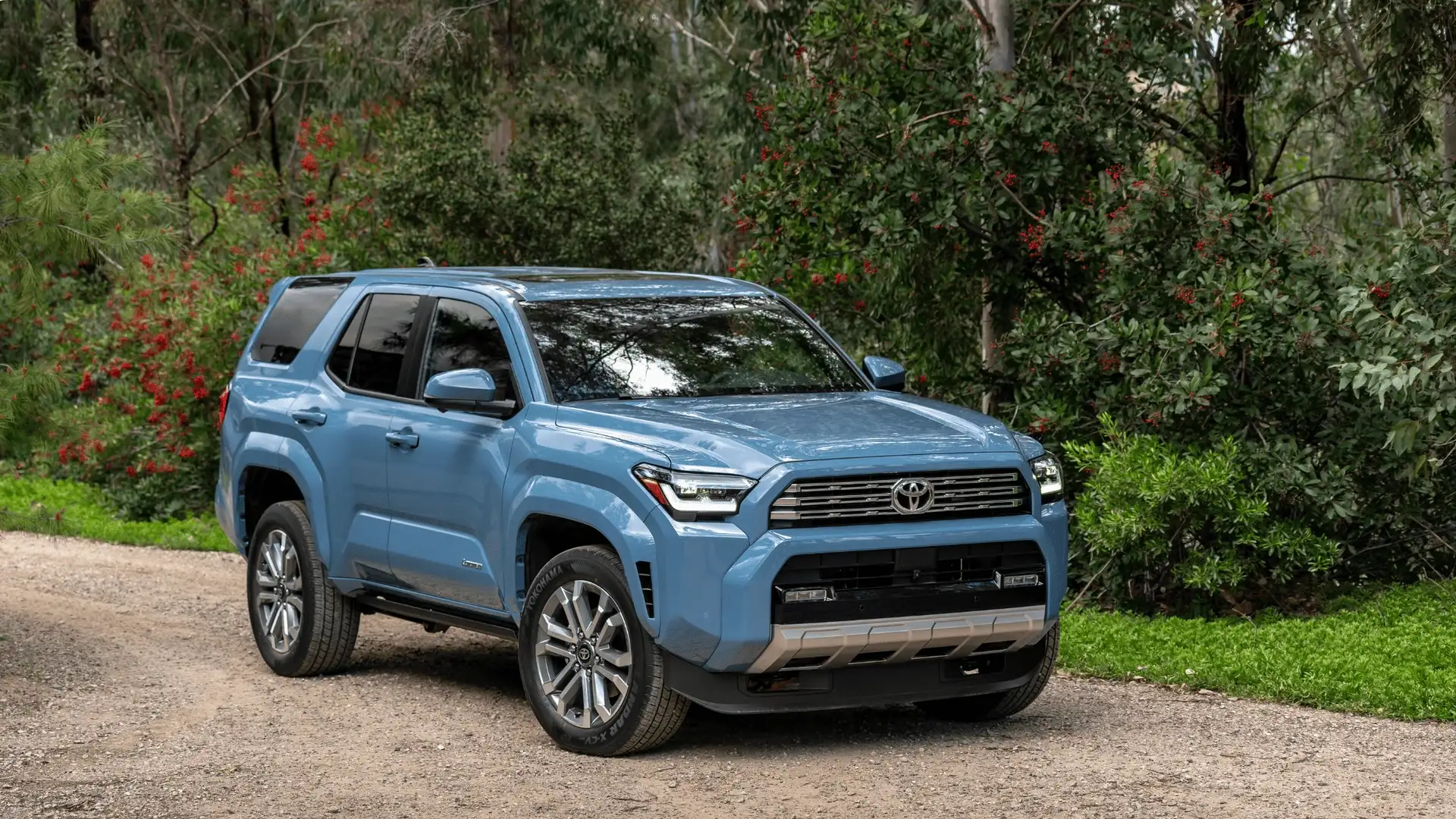
he 2026 Toyota 4Runner introduces a redesigned body-on-frame SUV engineered with updated turbocharged powertrains, refined suspension geometry, expanded digital interfaces, and comprehensive safety systems. This generation transitions to a 2.4-liter turbocharged four-cylinder architecture across both standard and hybrid configurations. It integrates an 8-speed automatic transmission, advanced four-wheel-drive systems, and an upgraded multimedia platform. Every trim level reflects measurable specifications in horsepower, torque output, drivetrain ratios, chassis dimensions, towing capacity, and interior space. The following details outline the technical characteristics of the 2026 Toyota 4Runner based strictly on official product information.
Ground Clearance and Off-Road Angles
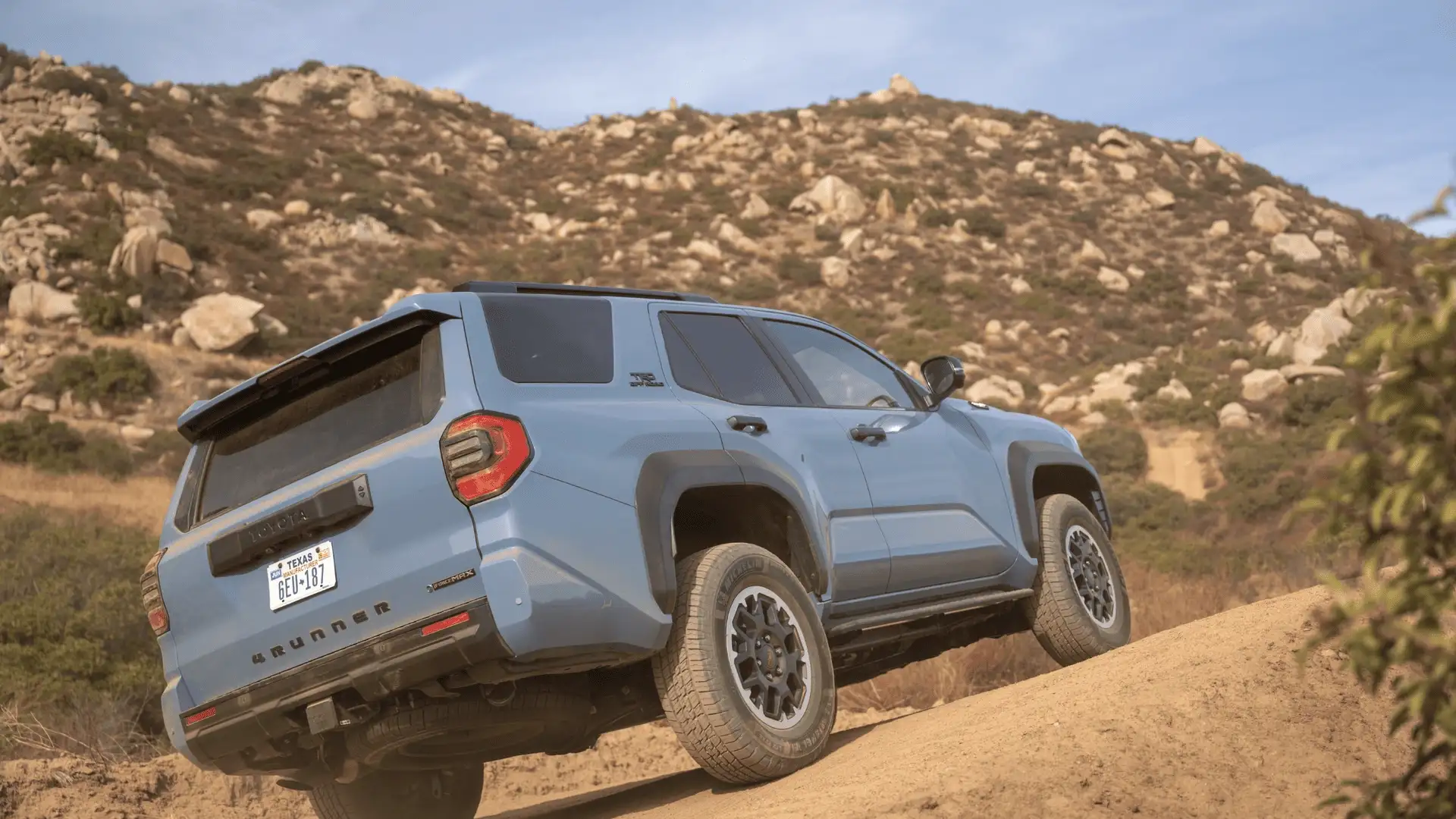
Approach, departure, and breakover angles vary by trim category. SR5 models provide an 18-degree approach angle, a 22-degree departure angle, and a 23-degree breakover angle, with 8.1 inches of ground clearance. Sport, Limited, and Platinum trims increase breakover to 24 degrees and ground clearance to 8.8 inches.
Off-Road trims provide a 19-degree approach angle, a 24-degree departure angle, a 24-degree breakover angle, and 9.1 inches of ground clearance. TRD Pro and Trailhunter trims increase the approach angle to 33 degrees and ground clearance to 10.1 inches while maintaining 24-degree departure and breakover angles.
Multi-Terrain Select and Crawl Control are available on Off-Road and higher trims. Multi-Terrain Monitor and Panoramic View Monitor systems are also offered on specific grades. Underbody protection includes composite skid plates on select trims and steel skid plates, steel transfer case protectors, and steel rear differential protectors on TRD Pro and Trailhunter models.
Digital Instrumentation and Multimedia Systems
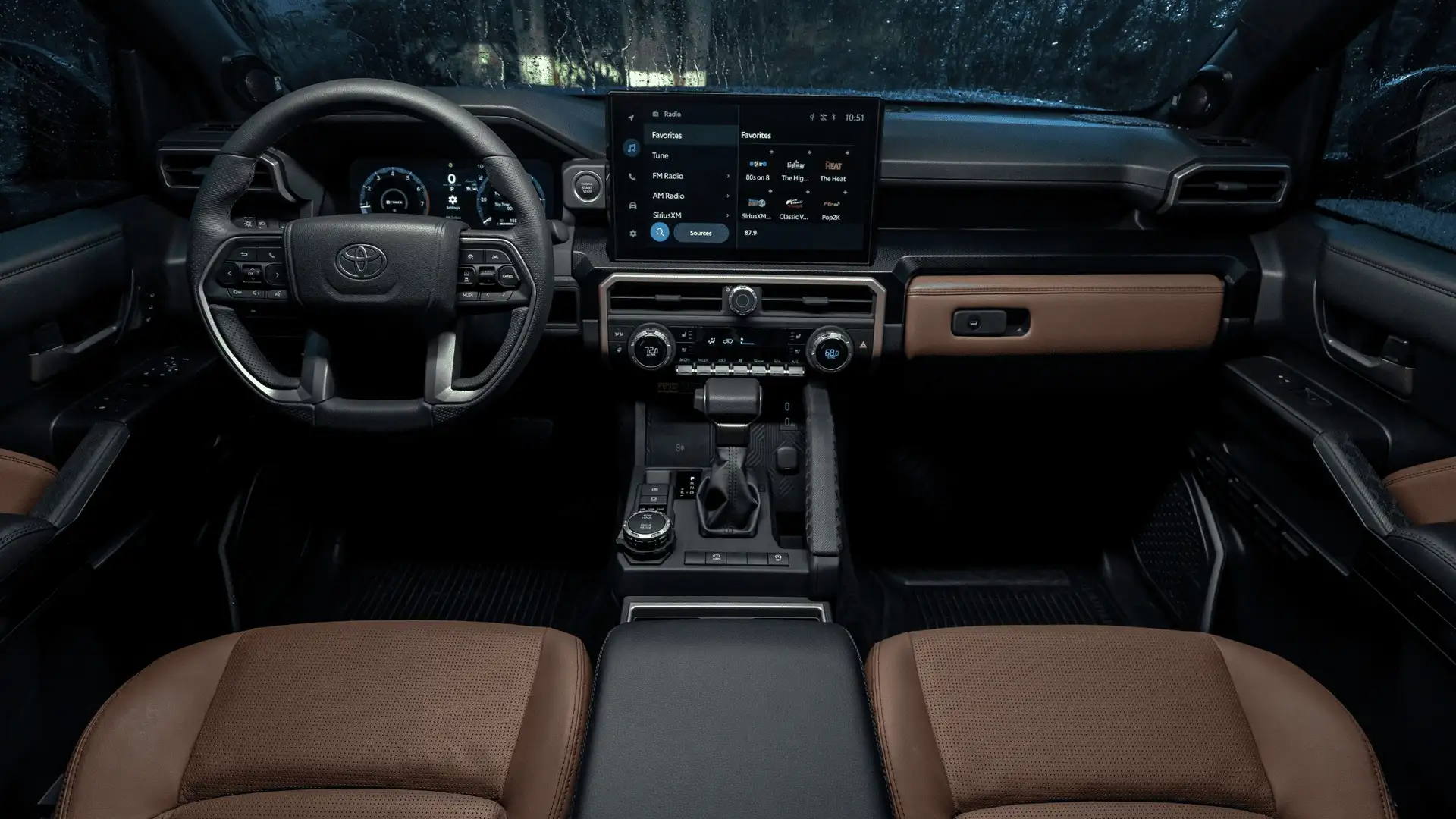
Most trims feature a 12.3-inch digital gauge cluster with selectable display screens that provide fuel economy, driver assist information, vehicle data, and warning messages. A 7-inch color Multi-Information Display is available on select trims.
The standard multimedia interface includes an 8-inch Audio Multimedia Display paired with an 8-speaker audio system and wireless Apple CarPlay® and Android Auto™ compatibility. Higher trims upgrade to a 14-inch Audio Multimedia Display with a 14-speaker JBL® audio system, integrated subwoofer, amplifier, and JBL® FLEX portable Bluetooth® speaker.
Additional features include a Head-Up Display on select trims, Qi-compatible wireless charging, five USB-C ports, a Smart Key System with push-button start, Digital Key capability, and multiple 12V and 120V power outlets depending on grade.
Turbocharged Engine Architecture and Hybrid Output
The 2026 Toyota 4Runner offers two distinct powertrain configurations: the i-FORCE turbocharged engine and the i-FORCE MAX hybrid turbocharged engine. Both engines use a T24A-FTS 2.4-liter inline four-cylinder design with Double Overhead Cam construction and D-4ST direct and port fuel injection. Displacement measures 2,393 cubic centimeters, with a bore and stroke of 87.5 mm by 99.5 mm. The compression ratio is 11 to 1.
The standard i-FORCE engine produces 278 horsepower at 6,000 rpm and 317 lb-ft of torque at 1,700 rpm. Torque delivery begins at a low engine speed, supporting responsive acceleration and load management. The ignition system uses Direct Ignition with iridium-tipped spark plugs. Regular-grade fuel is specified.
The available i-FORCE MAX hybrid configuration integrates the 2.4-liter turbocharged engine with an electrified system to increase total output to 326 horsepower at 6,000 rpm and 465 lb-ft of torque at 1,700 rpm. The hybrid system increases low-end torque significantly compared to the non-hybrid configuration. This output supports towing demands, off-road torque application, and steady highway merging performance. Both engines are paired exclusively with an 8-speed automatic transmission.
Transmission Ratios and Drivetrain Configurations
The 8-speed automatic transmission is standard across all trims. First gear carries a ratio of 4.41, followed by 2.80 in second gear, 1.95 in third, 1.51 in fourth, 1.27 in fifth, 1.00 in sixth, 0.79 in seventh, and 0.65 in eighth. Reverse gear carries a ratio of 3.64. This spread supports low-speed torque multiplication and reduced engine speed during highway cruising.
The 2026 Toyota 4Runner is available in three drivetrain layouts. The 4×2 configuration uses a front-mounted engine with rear-wheel drive. The part-time 4×4 system provides selectable four-wheel drive capability. A full-time 4×4 system is also available on select trims. The transfer case ratio for 4×4 models is 1.00 to 1 in high range and 2.57 to 1 in low range. The final drive ratio is 3.583. These specifications enable controlled torque distribution across varied terrain conditions.
Fuel Economy Specifications by Configuration
Fuel efficiency varies depending on drivetrain and powertrain selection. The i-FORCE 2WD SR5, Sport, and Sport Premium models are rated at 20 mpg city, 26 mpg highway, and 22 mpg combined. The i-FORCE 2WD Limited achieves 20 mpg city, 24 mpg highway, and 22 mpg combined.
For i-FORCE 4WD models, the SR5, Sport, Sport Premium, Off-Road, and Off-Road Premium deliver 19 mpg city, 25 mpg highway, and 21 mpg combined. The i-FORCE 4WD Limited is rated at 20 mpg city, 24 mpg highway, and 21 mpg combined.
The i-FORCE MAX 4WD hybrid configuration improves fuel economy to 23 mpg city, 24 mpg highway, and 23 mpg combined across Off-Road, Off-Road Premium, Limited, Trailhunter, Platinum, and TRD Pro trims. These ratings reflect EPA estimates
Disclaimer: * Projected EPA-estimated 20 city/26 hwy/22 combined mpg rating for 2026 4Runner SR5 RWD, TRD Sport RWD and TRD Sport Premium RWD; projected EPA-estimated 19 city/25 hwy/21 combined mpg rating for 2026 4Runner SR5 4WD, TRD Sport 4WD, TRD Sport Premium 4WD, TRD Off-Road 4WD and TRD Off-Road Premium 4WD; projected EPA-estimated 20 city/24 hwy/22 combined mpg rating for 2026 4Runner Limited RWD; projected EPA-estimated 20 city/24 hwy/21 combined mpg rating for 2026 4Runner Limited 4WD; and projected EPA-estimated 23 city/24 hwy/23 combined mpg rating for 2026 4Runner TRD Off-Road Hybrid 4WD, TRD Off-Road Premium Hybrid 4WD, Limited Hybrid 4WD, Platinum, TRD Pro and Trailhunter as determined by manufacturer. EPA estimates not available at time of publishing. Use for comparison purposes only. Your mileage will vary for many reasons, including your vehicle’s condition and how/where you drive. See www.fueleconomy.gov.
Suspension Systems and Steering Geometry
The 2026 Toyota 4Runner maintains a body-on-frame chassis combined with independent front suspension and a multi-link rear suspension. The front suspension uses a double-wishbone design with a stabilizer bar and twin-tube shock absorbers. The rear suspension consists of a multi-link system with coil springs and outboard-mounted twin-tube shock absorbers.
Electronic Power Steering with a power-assisted rack-and-pinion configuration provides steering input. The system requires 3.25 turns lock-to-lock and delivers a turning radius of 19.7 feet. This geometry supports maneuverability relative to vehicle length.
Brake hardware includes 13.4-inch front rotors and 13.2-inch rear rotors. An Electronic Parking Brake is standard across all trims.
Wheel Designs and Tire Specifications
Wheel and tire configurations vary by trim. The SR5 uses 18-inch dark gray metallic alloy wheels with 245/70R18 tires. TRD Sport and TRD Sport Premium trims feature 20-inch machine-finished alloy wheels with 265/55R20 tires. TRD Off-Road and TRD Off-Road Premium trims use 18-inch machine-finished alloy wheels with 265/70R18 tires.
Limited models are equipped with 20-inch machine-finished alloy wheels with 265/55R20 tires. The Trailhunter features 18-inch flat bronze-finished alloy wheels with 265/70R18 tires. The TRD Pro uses 18-inch flat black-finished alloy wheels with 265/70R18 tires. Platinum models include 20-inch black alloy wheels with 265/55R20 tires.
Exterior Dimensions and Structural Measurements
All trims share a wheelbase of 112.2 inches and an overall length of 194.9 inches. Overall width measures 77.9 inches on most trims and 79.9 inches on TRD Pro and Trailhunter. Height varies by trim. The SR5 measures 72.6 inches tall, the Sport and Limited measure 73.1 inches, the Off-Road trims measure 73.6 inches, and the TRD Pro and Trailhunter measure 74 inches or 75.5 inches with a roof rack.
Curb weight varies depending on drivetrain and trim. The lightest configuration begins at 4,455 pounds for the 2WD SR5. Hybrid-equipped trims reach up to 5,500 pounds. Gross Vehicle Weight Rating ranges from 6,005 pounds to 6,505 pounds depending on configuration.
Maximum towing capacity is rated at 6,000 pounds using SAE J2807 methodology. Fuel capacity is 19 gallons. Engine oil capacity is 5.9 quarts with filter.
Interior Dimensions and Cargo Capacity
The 2026 Toyota 4Runner provides seating for five passengers as standard. Seven-passenger seating is available on i-FORCE SR5 and Limited trims with a 50-50 split third-row seat. Front headroom measures 39.7 inches, rear headroom measures 37.8 inches, and third-row headroom measures 35.3 inches. Front legroom measures 41.8 inches, rear legroom measures 34.8 inches, and third-row legroom measures 31.8 inches.
Shoulder room measures 58.0 inches in the front and 57.8 inches in the rear. Hip room measures 55.2 inches in the front and 56.1 inches in the rear.
Cargo capacity varies by configuration. i-FORCE models provide 90.2 cubic feet behind the first row and 48.4 cubic feet behind the second row. Models equipped with a third row provide 84.1 cubic feet behind the first row, 44.8 cubic feet behind the second row, and 12.1 cubic feet behind the third row. The i-FORCE MAX configuration provides 82.6 cubic feet behind the first row and 42.6 cubic feet behind the second row.
Comprehensive Safety Systems and Driver Assistance
Toyota Safety Sense™ 3.0 is standard across all trims. This suite includes Pre-Collision System with Pedestrian Detection, Lane Tracing Assist, Dynamic Radar Cruise Control, Lane Departure Alert with Steering Assist, Automatic High Beams, Road Sign Assist, and Proactive Drive Assist.
Blind Spot Monitor with Rear Cross-Traffic Alert and Trailer Merge Warning is standard. Front and Rear Parking Assist with Automatic Braking and Pedestrian Detection is available on select trims. Front Cross-Traffic Alert and Traffic Jam Assist are also included across the lineup.
The 2026 Toyota 4Runner includes nine airbags consisting of driver and front passenger dual-stage airbags, seat-mounted side airbags, knee airbags, a front passenger seat cushion airbag, and front and rear side curtain airbags. Additional safety systems include an integrated backup camera with projected path, Tire Pressure Monitor System, LATCH anchors, child-protector rear door locks, and power window lockout control.
Visit Younger Toyota in Hagerstown, MD
We invite you to examine the specifications of the 2026 Toyota 4Runner in person and evaluate its measurable performance characteristics. During a test drive, you can assess the 278-horsepower i-FORCE engine or the 326-horsepower i-FORCE MAX hybrid system and experience the 8-speed automatic transmission under varied driving conditions. You can also review the 12.3-inch digital gauge cluster, 14-inch multimedia display, and Toyota Safety Sense™ 3.0 systems directly from the driver seat. Our team at Younger Toyota in Hagerstown, MD will provide detailed explanations of drivetrain configurations, towing capacity, and off-road geometry to support an informed evaluation. Contact us to schedule your test drive and review the technical capabilities of the 2026 Toyota 4Runner firsthand.
Contact Us